

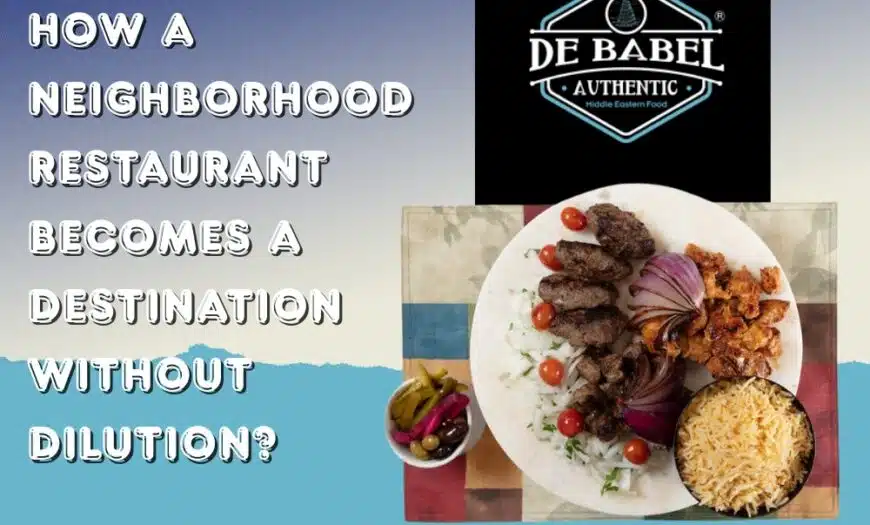
How a Neighborhood Restaurant Becomes a Destination Without Dilution?
A destination restaurant is not defined by how often it appears on social media, how crowded it looks on opening weekend, or how many influencers talk about it. In its truest sense, a destination restaurant is one that people intentionally travel to, return to repeatedly, and recommend consistently over time. It becomes part of someone’s routine, not just a one-time experience.
The difference between a popular restaurant and a destination restaurant lies in longevity. Popularity can be temporary, driven by trends, visuals, or marketing momentum. A destination, on the other hand, is built slowly. It earns its place through reliability, trust, and a guest experience that feels worth seeking out again and again.
The Risk of Growth Without Identity
One of the biggest challenges restaurants face is the pressure to grow before they are ready. Growth often looks attractive: new locations, bigger spaces, expanded menus, and higher visibility. But without a clearly protected identity, growth can quickly dilute what made a restaurant special in the first place.
Many restaurants expand based on demand alone, without first stabilizing their systems, culture, and standards. The result is often inconsistency. What once felt personal becomes generic. What once felt intentional becomes operationally stretched. Over time, guests stop recognizing the brand they originally connected with.
Growth without identity creates volume, but rarely creates loyalty.
Experience the De Babel Menu
Why Many Restaurants Lose Their Core as They Scale?
Scaling a restaurant is not just about replicating food. It is about replicating discipline. As visibility increases, pressure increases as well: higher traffic, larger teams, more complex operations, and more variables that can impact quality.
This is where many restaurants lose their core. Standards slowly become flexible. Training becomes rushed. Systems become reactive instead of proactive. Small compromises start to feel harmless, but over time they reshape the entire brand experience.
What gets lost is not just consistency, but intention. The restaurant begins adapting to demand instead of protecting what originally made it meaningful.
Discipline Over Hype
The alternative to dilution is discipline. Discipline is choosing systems over shortcuts, standards over speed, and long-term trust over short-term attention.
Hype can create crowds, but it cannot create foundations. Discipline builds the invisible structure that allows a restaurant to grow without losing itself. It shows up in how teams are trained, how decisions are made, and how quality is protected even when no one is watching.
Choosing discipline means being comfortable with slower growth. It means saying no more often than yes. It means resisting trends that do not align with the brand’s identity, even when they are popular.
Protecting Standards as Visibility Increases
As a restaurant becomes more visible, maintaining standards becomes harder, not easier. More guests bring more expectations. More volume brings more pressure. Every weak system becomes more noticeable under scale.
Protecting standards requires:
- Clear operational systems that do not depend on individual performance alone.
- Training that is continuous, not one-time.
- Accountability that is cultural, not just managerial.
- Decision-making that prioritizes long-term brand health over short-term convenience.
Visibility should strengthen a restaurant’s identity, not blur it. The only way that happens is when standards are treated as non-negotiable.
Remaining a Neighborhood Restaurant in Spirit
Becoming a destination does not mean abandoning the spirit of a neighborhood restaurant. In fact, the most successful destination restaurants are often those that never lose their sense of closeness to their community.
Remaining a neighborhood restaurant in spirit means:
- Treating repeat guests as relationships, not transactions.
- Valuing consistency more than expansion.
- Keeping feedback loops open and meaningful.
- Preserving the original culture even as the audience grows.
A destination restaurant does not feel exclusive. It feels familiar, no matter how far someone travels to reach it.
Growing a Destination Without Diluting the Brand
De Babel’s growth into a destination did not come from rapid expansion or aggressive visibility. It came from protecting internal systems before external growth, and choosing operational discipline over promotional momentum.
By prioritizing standards, resisting unnecessary hype, and focusing on long-term consistency, De Babel was able to grow organically into a restaurant people actively seek out without losing its original identity or diluting its core values.
Recognition, repeat visits, and sustained word of mouth became natural outcomes of that discipline, not the goal itself.
The result is a restaurant that feels both local and destination-worthy at the same time a place rooted in its neighborhood, yet trusted far beyond it.
Rather than relying on marketing exposure, De Babel has earned its visibility through consistent guest satisfaction and organic growth. This is reflected in its inclusion on Yelp’s Top 100 Places to Eat in the United States, a ranking shaped by long-term user reviews and real dining experiences.